2019
Acquired

 Image: Brussels Airport
Aviation is one of the primary drivers and facilitators of economic growth1, playing a pivotal role in connecting the world and supporting global trade and commerce. However, this critical growth comes at a cost, with aircraft being significant carbon emitters, contributing between 2.5 to 3% of the world’s total CO2 emissions.2 While airports are largely removed from airline decisions related to fuel or aircraft selection, they have an important part to play in influencing, facilitating and promoting solutions that reduce their Scope 3 emissions.
Brussels Airport, in which QIC holds an equity share, is located in Europe’s political capital, home to the EU and NATO headquarters. Sitting on 1,245ha of land, approximately the same size as London Heathrow, it has a captive catchment that extends over five countries (Belgium, France, Netherlands, Luxembourg and Germany), with 15 million people living within 90 minutes of the airport.
As a significant gateway and hub, Brussels Airport is working to test and deploy innovative sustainability-focused solutions aimed at reducing its environmental footprint, with a focus on noise, air quality, decarbonisation and mobility.
Brussels Airport has a long and successful history of driving sustainability-focused innovations, which include:
With focus on aviation’s environmental footprint growing, Brussels Airport management will continue to test, deliver and implement pioneering sustainability-focused innovations.
In line with our active asset management approach, QIC engages with the airport’s Board and management to support the airport in developing and delivering on its sustainability-focused SHIFT 20273 strategy4.
Brussels Airport was an early mover with the introduction of the modulation of airport charges in 2016, which had an environmental component that varied by a factor of three times based on an aircraft’s noise profile (i.e. the loudest aircraft were charged three times more than the quietest).
With the start of the present price regulatory cycle in April 2023, this environmental noise component has been increased to a factor of twenty times. This framework was supplemented in April 2023 by the introduction of a nitrogen oxide charge component, important for local air quality.
As an investor in Brussels Airport since 2019, QIC supported management in the development of these innovative and pioneering proposals which influence airlines on which aircraft to fly into Brussels Airport. Most recently, in April 2024 Singapore Airlines introduced a new direct service to Brussels Airport, flying the more environmentally friendly A350.
Brussels Airport launched and has led the Stargate Consortium since 2021. The consortium comprises 22 European partners including airports, airlines, industry experts, industrial partners and local authorities. Its goal is to drive the acceleration of the greening of aviation in Europe.
In 2021, the consortium successfully applied for and received a €24.8m grant through the EU Commission’s European Green Deal5 to fund, develop, test and deploy innovative solutions to help make aviation, including airports, more sustainable. Established in December 2019, the European Green Deal set climate goals which were then legislated through the “Fit for 556” package in April 2021, in reference to the EU’s target of reducing net greenhouse gas emissions by at least 55% by 2030.
Initiatives implemented by the consortium to date include Sustainable Aviation Fuel (SAF) distribution, green landings (a continuous descent technique for aircraft resulting in lower emissions, noise, and fuel consumption), e-ground handling with the use of hydrogen and EV fuel cells, shared solar farms, and optimisation of all rail services and public transport. Brussels Airport is the testbed for many of these innovative projects, which if successful will be implemented longer term at the airport and replicated elsewhere.
SAF is an industry term that refers to jet fuels that generate less CO2 emissions than conventional fuels on a lifecycle basis. SAF fall into two main categories:
Before use, SAF must currently be blended with kerosene, with most engines certified to have a maximum blend of 50% SAF. The industry is working towards 100% SAF certification.
Depending on the combination of production, feedstock and lifecycle factors, SAF can reduce carbon emissions by up to 85% (and theoretically 100% with eSAF) when compared to conventional A1-jet fuel.
As of 1 January 2023, Brussels Airport was successfully supplied with SAF through NATO’s Central European Pipeline System (CEPS).8 As the only Belgian airport fully supplied with kerosene through the NATO pipeline network, opening the pipeline for the supply of SAF signified an important milestone in sustainable aviation at Brussels Airport. The Stargate Consortium is also currently investigating the possibility of supplying ‘on demand’ high blend SAF to airlines, partnering with consortium partner Skytanking to test the viability of having a mobile blending facility at Brussels Airport.
With federal government support, Brussels Airport is granting a special financial incentive to promote the use of SAF, available to all airlines for all flights taking off from Brussels Airport in 2024. Together with airline fleet renewals, this is an important step in supporting the industry to progress toward a common net zero carbon by 2050 goal (International Air Transport Association and Airports Council International aligned). Brussels Airport has committed to net zero carbon (Scope 1 and 2) by 2030 at the latest.
Together these initiatives contribute to the airport’s efforts to progress towards the ambitious EU SAF targets (6%9 by 2030) with higher blend ratios.
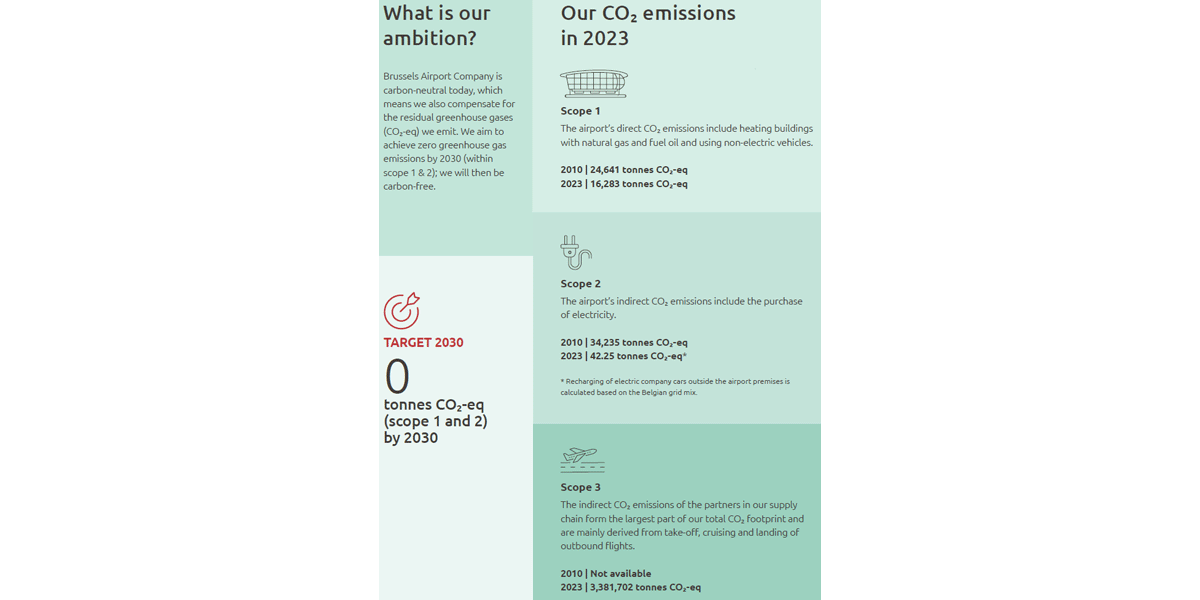 Figure 1: Brussels Airport net zero greenhouse gas emissions by 2030 [10]
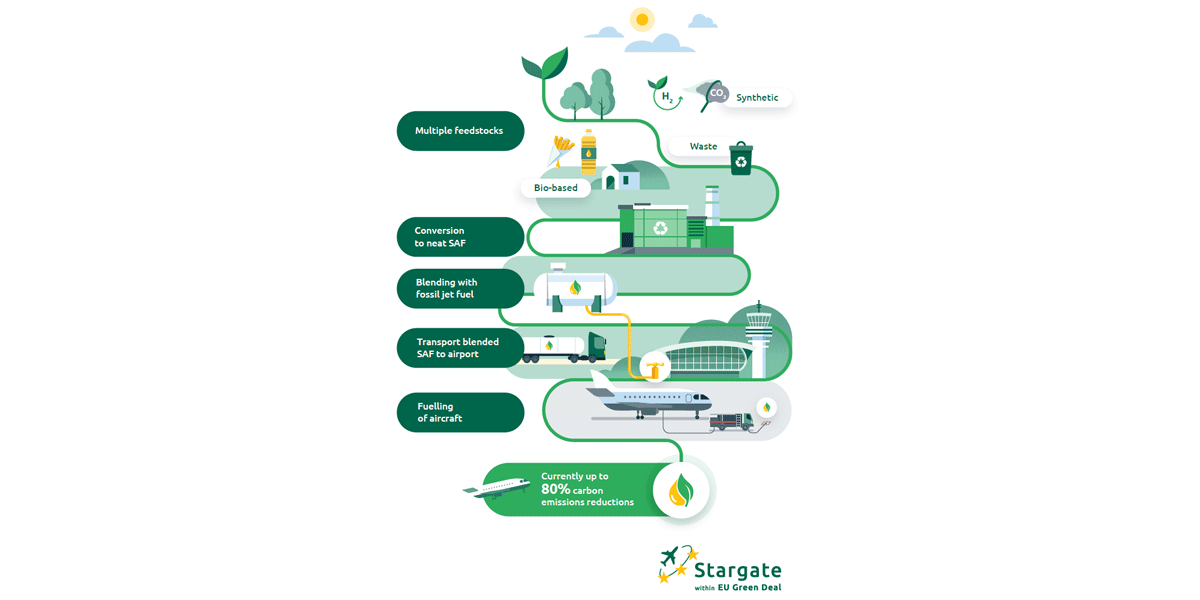 Figure 2: Brussels Airport SAF production chain [11]
 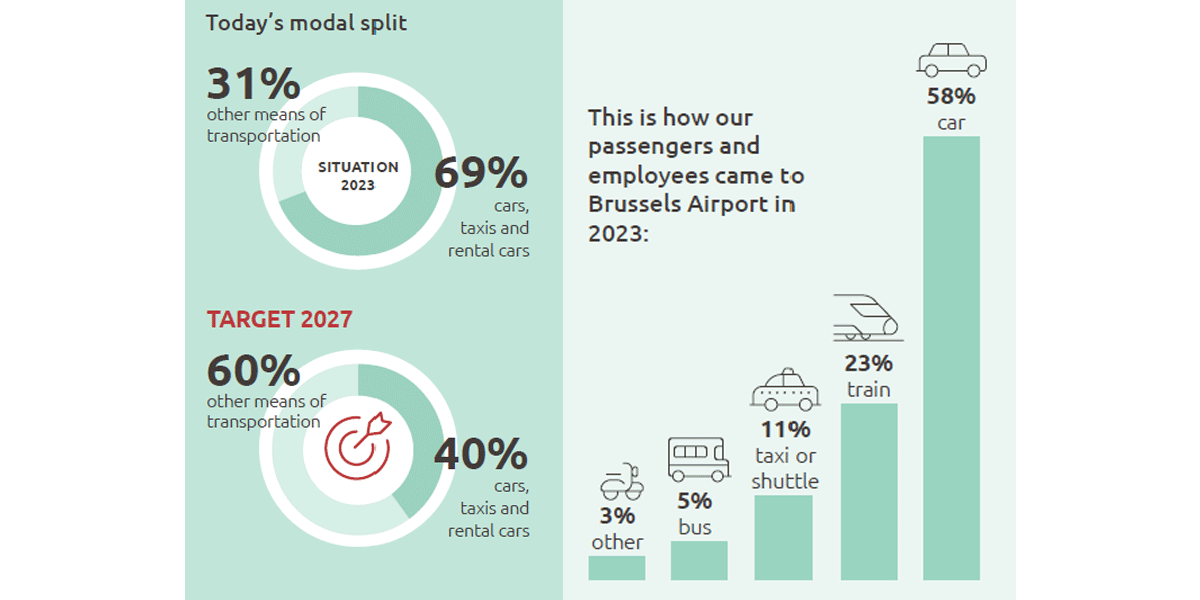 Figure 3: Multimodal transport at Brussels Airport [12]
Read our Insight Paper to find out more about decarbonisation in the aviation industry.
Listen to our podcast to find out more about Brussels Airport’s innovation initiatives.
Citations
This document is subject to the QIC Disclaimer and website access terms and conditions.
ESG
Certain information contained herein relating to ESG goals, targets, intentions, or expectations, including with respect to net zero targets and related timelines, is subject to change, and no assurance can be given that such goals, targets, intentions, or expectations will be met. ESG-related calculation methodologies and data collection practices and the reporting thereof as a whole are evolving, and other asset managers are implementing different frameworks, methodologies, and tracking tools. The selection of such different but acceptable measurement techniques can result in materially different measurements. Further, these techniques are subject to measurement uncertainties resulting from inherent limitations in the nature and methods used to determine such data. The precision of different measurement techniques may also vary.
Asset Summaries
The asset transaction summaries presented or referred to herein may not be representative of all transactions of a given type or of investments generally and are described for informational and illustrative purposes only. The information contained herein references and describes specific investment opportunities that QIC has previously pursued, and it should not be assumed that these investments, or any future investments made by QIC, will ultimately be profitable. The information provided should not be deemed a recommendation to invest in the investments mentioned. Recipients should also note that the asset transaction summaries presented or referred to herein have involved QIC professionals who may be involved with the management and operations of the investment as well as other QIC personnel who will not be involved in the management and operations of the investment. Past performance is not a reliable indicator of future performance.