
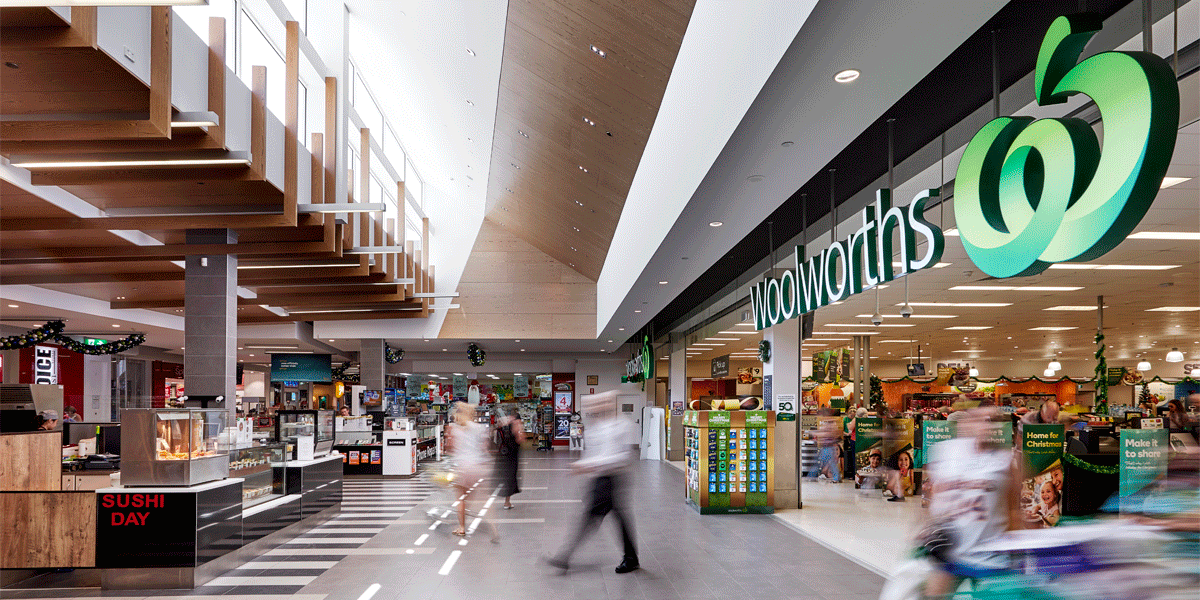
 Image: Nerang Mall, QLD
In the ever-evolving landscape of real estate investment, assets in the core plus category have emerged as an attractive option for domestic and international investors. Their well-understood valuations, liquid nature, opportunities for alpha, solid yields and lower price point are driving investor interest in this sector.
In this article, QIC Real Estate’s Fund Manager - Core Plus Strategies, Charles Occhino, and Deputy Fund Manager, Joycelin Sim, explore the value of actively managing core plus assets and share insights into why a core plus exposure is an important complement to core assets in investment portfolios.
See below a glossary of key terms.
For the uninitiated, what is considered a core plus real estate asset?
Charles Occhino: At QIC, we consider core plus assets as those assets that sit between the low-risk, stable returns of core assets, such as the dominating shopping centres, or prime CBD office buildings, and the higher-risk, higher-reward potential of Value-Add or Opportunistic assets. Core plus investments typically involve properties that are fundamentally robust and located in strong markets but offer opportunities for some level of improvement and enhanced returns through active management. The non-discretionary nature of the sector’s tenant base means income and, by extension, returns are defensive. It's typically high yield for relatively low risk, making it very attractive to investors.
Joycelin Sim: For instance, our core plus portfolio includes properties valued under A$300 million, such as neighbourhood, sub-regional, and large-format shopping centres, well-located industrial facilities, and other alternative sectors. These properties are supported by a majority of non-discretionary tenants—those providing essential goods and services. As a result, they offer relatively stable income returns, even during economic fluctuations. During the pandemic lockdowns, for example, 70% of our tenants were classified as essential and continued to operate, ensuring steady income for the portfolio.
Charles: QIC Real Estate has operated in this sector for many years, managing one of Australia’s largest core plus portfolios, providing investors with a strategy that can be complementary to their core real estate exposure.
In portfolio construction terms, what role can core plus real estate play?
Charles: We see core plus real estate as a true complement to any investors core real estate exposure, enhancing their overall portfolio performance and diversification. A core return profile is often achieved through dominant asset locations with a high value, lower levels of gearing and properties, performing at their full potential. However, complementing a portfolio with a core plus exposure will typically generate higher returns moving slightly up the risk curve, diversification benefits, and a potential pathway to liquidity, all while maintaining a balanced risk-return profile for investors.
Joycelin: While core plus assets may present some operational or leasing risks, these issues can be mitigated through active management strategies. For us, active management means executing projects that bring an asset’s performance up to its full potential. Examples include, accessing rental reversions, remedying entrenched vacancies, remixing tenants or targeted asset improvement projects.
How would you describe investor sentiment towards the core plus real estate sector right now?
Charles: Investor sentiment is strong. In this high interest rate, high inflationary environment, investors are looking for yield and defensive cash flows, value-add projects, strong governance, liquidity and stable valuations. As a result, they are seeing this asset class as a safe place to deploy capital.
Joycelin: Absolutely. I also think that investors are seeking out assets where they can extract alpha, and core plus assets by their nature respond very well to active management. Take a recent project at our Kippa Ring Shopping Centre, for example. In 2021, we secured an early surrender of lease from an underperforming major tenant in a 2,400sqm anchor tenancy and replaced it with a market-leading gym. This repositioning increased traffic and the overall asset value.
Are all core plus assets equal?
Joycelin: No, they aren’t. Location, asset creation, and the level of due diligence are critical factors in identifying assets that provide strong, risk-adjusted returns.
Charles: We look for locations with strong demographics, growth potential, and stable local governments. The asset’s income growth, pricing and quality of tenants are also important, though with active management expertise underperforming tenants can be quickly remedied.
For industrial assets, proximity to infrastructure and established trade routes is essential, for retail, it's about demographics, competition, and income growth and for office, prime locations with strong leasing fundamentals are key. We look for these features and add value through physical improvements or enhanced management.
A key attribute of core plus real estate is the relative ease in cycling in and out of assets. How important is timing when doing this?
Joycelin: Timing is crucial. We look at the needs of the portfolio as a whole, which are always changing. Our team consistently reviews the future return drivers of each asset in the portfolio and if an asset is assessed to have reached its maturity, we will recycle that asset out and into a new opportunity whilst delivering returns for our investors.
Charles: As Joycelin has mentioned, we divest for a number of reasons: investor liquidity needs, asset maturity and anticipating headwinds. For instance, if there is a change in a local planning regime that exposes our investors to excess competition in a trade area we have invested into, we will look to divest. Our approach is buy-fix-sell or hold, with specific strategies for each asset, including ESG considerations.
What advice do you have for investors considering Australian core plus assets?
Joycelin: Clear definitions of what core plus provides are crucial. Understand that core plus offers a balanced risk-adjusted return, which is different from opportunistic investments. We also recommend that investors get to know the nuances of different retail sectors. Identifying what aspects of Australian retail they value will help them make informed decisions.
Charles: Market timing is critical, and we have observed stable valuations and transactions over the prevailing 12 months providing investors’ confidence in the sector. I also want to impress that having a core plus exposure alongside core real estate investments is essential for stable returns and the potential re-rating of core funds, leading to healthy forward returns overall.
Joycelin: While core plus will continue to be a complementary strategy with unpredictable growth potential, it is increasingly recognised as essential for institutional investors, especially those already invested in core real estate.
What’s your outlook for the sector?
Charles: Our outlook is promising. The sector is gaining popularity among institutional investors and is now seen as a prerequisite to core real estate investment. Investors are seeking heightened governance through club fund structures, stability in valuations, defensive cashflows and greater liquidity options.
To learn more about core plus real estate contact our Client and Business Development team.
Glossary of Key Terms
- Core plus real estate: Core plus real estate encompasses properties with strong fundamentals that offer the potential for enhanced returns compared to core real estate. While these properties carry slightly higher risk, they often present opportunities for improvement or value addition through active management. Investors in core plus real estate seek to achieve a balance between stable income and the potential for significant value appreciation, aiming for both steady returns and growth potential.
- Core real estate: Core real estate investments generally involve properties with strong fundamentals, situated in prime areas and providing stable, long-term income streams. Core real estate is characterised by low risk and steady returns, making them appealing to investors seeking predictable returns profile.
- Opportunistic / Value-add real estate: Opportunistic/ Value-add real estate involves higher risk for the potential of higher returns. Value-add properties in this category typically require significant improvements or repositioning to enhance their value. Opportunistic investments may include distressed properties, greenfield developments, or projects in emerging markets with high growth potential. These investments often involve higher gearing and debt, and they appeal to investors seeking substantial returns in exchange for taking on higher risk metrics.
- Neighbourhood retail: Neighbourhood retail refers to small to medium-sized retail centres, less than 10,000sqm that serve the immediate residential area. These centres typically include a supermarket, convenience stores, pharmacies, and other essential services that cater to the daily needs of local residents.
- Sub-regional retail: A medium sized shopping centre, between 10,000swm and 30,000sqm, typically incorporating at least one full line discount department store, a supermarket and up to 50 specialty stores.
- Large-format retail: Large format retail assets are usually a simple layout with large on grade or basement car parks. Categories include furniture, household goods, home improvement, pets, food, automotive/trade, office supplies and electrical appliances. Tenancies are larger and rents are cheaper than typical retail, offering retailers more space to display products and store inventory on site.
- Non-discretionary retail: Non-discretionary retail comprises stores that provide essential goods and services that consumers need regardless of economic conditions. This category typically includes supermarkets, pharmacies, healthcare services and other basic necessities, and tends to be more resilient during economic downturns.
- Income yield: Income yield refers to the annual income generated by a real estate asset as a percentage of its value. It is calculated by dividing the net income from the property by its current market value. This measure helps investors assess the return on investment from rental income, excluding any potential appreciation.