

Download the PDF

Oil prices, inflation and financial markets
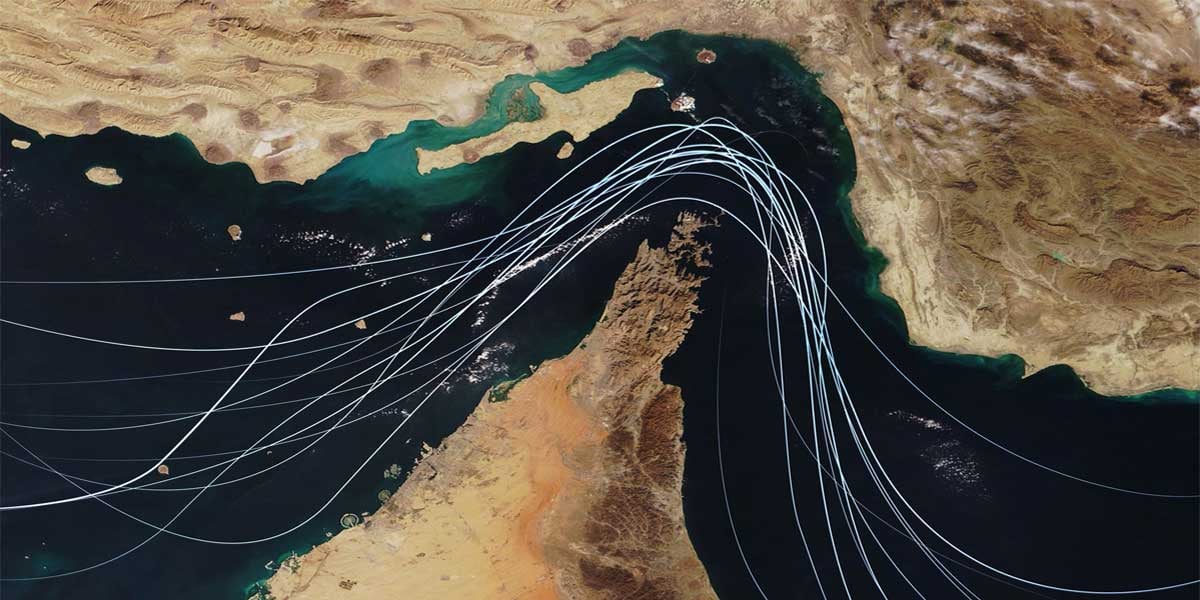
The Australian economy has been buffeted by a myriad of shocks. In this week’s Brief we take pause to reflect on how the economy is responding to recent events and what are the pathways forward. Let’s begin with oil. The Iran war is about to enter its 13th week, with another round of announcements by the Trump Administration of an imminent deal with Iran that will reopen the Strait of Hormuz.
While the slim hope that a deal with Iran will be struck has seen oil prices pull back from their recent highs, the fact is that Brent Crude continues to track within a band of US$100-US$115/bbl, with its current price of US$105/bbl 50% higher than its pre-war level. Similarly, interest rates remain elevated with the US 10-year Treasury yield (perhaps the most important interest rate for setting global borrowing costs) trading at 4.6%, 65 basis points (bps) higher than its pre-war rate. Australian interest rates have followed suit, and the Australian Government 10-year bond yield has just dipped below the 5% barrier and is trading at 4.9%, about 30 bps above its pre-war rate.
Although the rise in the oil price has been contained around the US$100-US$110/bbl mark, and worst fears of a breakout in price to US$150/bbl or higher have not materialised, time is now working against economies as higher oil prices feed into supply chains beyond the petrol bowser. In the US, inflation lifted to an annual rate of 3.8% in April, up from 2.4% in February, with forecasters expecting inflation to remain above 3% until 2027.
In Europe, inflation increased to 3.0% in April, up from 1.9% in February, in terms of the annual rate, while the monthly April inflation rate hit a hefty 1.0%, following a 1.2% rise in March. As in the US, forecasters are expecting European inflation to remain above 3% for the remainder of the year. In Australia, we must wait until next week for the ABS to release their April inflation report. Unlike the US and Europe, where inflation starts with a 3-handle, Australian inflation is already above 4%, as the oil shock is combining with already elevated inflation rates in our services sectors.
Our forecast is for Australian inflation to peak above 5%, more than 2 percentage points higher than the top of the RBA’s inflation target range. With high inflation and high interest rates, are we seeing cracks appearing in the outlook?
Let’s start with financial markets. Outside of the bond market, much market commentary has focused on the US equity market and how resilient that market has been in the face of the Iran conflict. In fact, the US equity market is up by over 8% since the outbreak of the war. However, much of the rise in US equity prices is attributable to the strength of tech stocks as confidence in the AI thematic appears undented by Iranian conflict; for example, the tech heavy NASDAQ index is up by 16% since the war began.
But a different picture emerges when we look beyond the tech sector. Within the broader S&P 500 index of US equities, when the contribution of the tech-oriented Information and Communications sectors are taken out, US equity prices have barely moved since the start of the conflict. Looking at the less tech-heavy European and Australian stock markets confirms the reliance on tech for positive equity performance. Both the European and Australian equity indices have fallen since the start of the Iran war, with Europe down by 3% since the end of February and Australia down by 6%.
Despite the high interest rates and inflation, and tepid performance of equity markets outside the tech sector, there is still little hard evidence that the major economies are being hit by the oil shock. Part of the reason is that economic data on the real economy comes to us with a lag and part of the reason is that there are lengthy lags between when an inflation shock hits and when businesses and households adjust their behaviour.
However, in a warning sign, April labour market data showed a sharp drop in Australian employment and a rise in the unemployment rate from 4.3% to 4.5%. The sudden deterioration in the labour market data could just be noise; the Australian monthly data can be quite volatile and jumps in the unemployment rate of this magnitude are not uncommon.
Nonetheless, markets reacted swiftly, cutting their bets on RBA rate hikes and pushing out their expectations of the next RBA rate increase to the end of the year. The market is now factoring in only one more rate hike rather than two in the RBA’s current tightening cycle.
So, where does this leave us? In our view, we still have time to avoid shifting from the Benign to the Malign scenario, but time is running out.
The rise is oil prices has been contained, but now we are seeing a sustained rise that risks flowing through the entire economy. Outside the tech sector, equity market performance has been tepid but not disastrous, but if higher interest rates and inflation start to undermine the growth outlook, we doubt that equity markets will be able to avoid a sharp downturn.
Our end-June deadline for a reopening of the Strait of Hormuz, that will save us from shifting from the Benign to Malign scenario is fast approaching. If the Trump Administration delivers on its promise of a deal with Iran within the next four weeks, the global economy might yet escape this conflict intact.