

Download the PDF
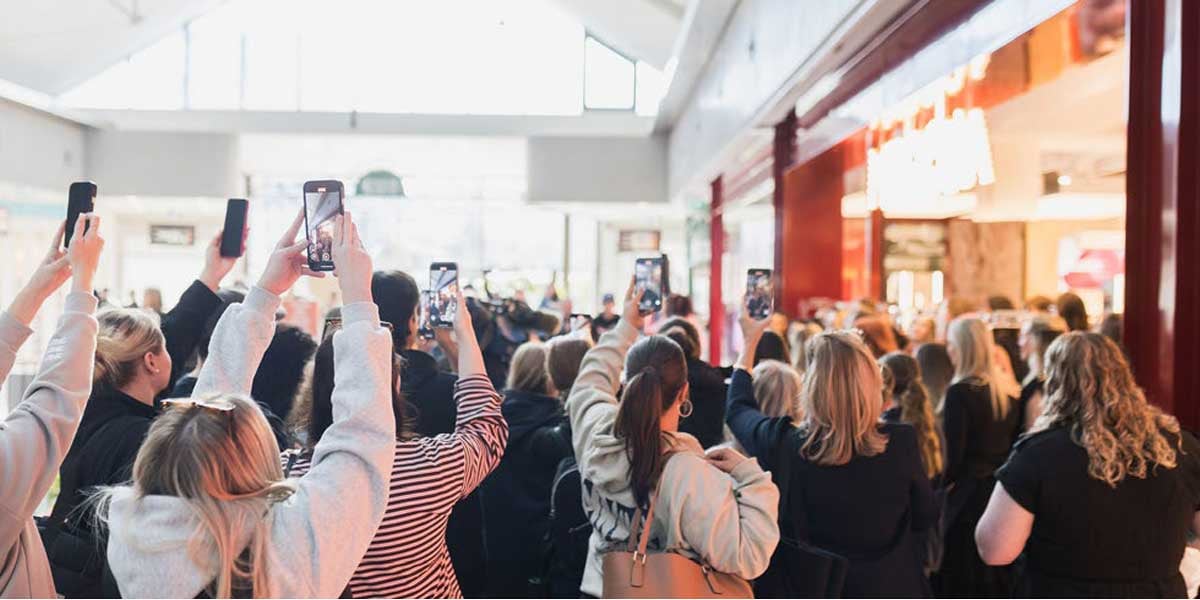 Mecca Flagship, Canberra Center
Originally published in Shopping Centre News.
As we look ahead to 2026, the Australian retail landscape continues to demonstrate resilience and evolution.
Strong employment, population growth, and strengthening domestic and international tourism continue to underpin performance across key retail categories. However, the way consumers discover, engage with, and experience retail is transforming, demanding sharper strategic focus.
What is increasingly evident is divergence. Scale, location and relevance now matter more than ever. Retail spending growth continues to be supported by population growth and nominal expenditure, even as real per-capita spending remains under pressure. In this environment, assets with strong trade-area fundamentals, transport accessibility, proven visitation and the ability to adapt their offer are consistently outperforming.
For QIC, this reinforces the strategic locations of our super-regional and major regional assets, alongside a growing neighbourhood and convenience retail platform. Together, they provide exposure across different spending missions – from destination-led discretionary retail to everyday convenience and essential services – allowing us to respond to local market conditions with precision rather than uniformity.
At the same time, a more measured pace of new retail supply across regional and subregional formats is sharpening competitive dynamics. In this environment, the next phase of growth is being defined less by scale and more by how well existing space is curated, adapted and intensified.
For QIC, this is not a new discipline. The optimisation of space has been a sustained focus across our portfolio, enabling strategic remixing, the introduction of new brands to local markets and the continual re-alignment of assets with evolving customer expectations.
This approach is evident in the ongoing evolution of Castle Towers, in Castle Hill, NSW, and Canberra Centre, where targeted reinvestment has elevated brand mix and customer experience, as well as in the revitalisation of the Hunter & Gatherer fresh food precinct at Pacific Epping. Across the portfolio, our landholdings also provide flexibility for smaller, incremental additions that unlock productivity and respond to local demand without diluting asset quality.
One of the most significant shifts under way is the evolution of retailer network strategies. Across categories, retailers are consolidating their physical footprints, prioritising higher-performing locations that can do more operationally, experientially and digitally.
This is not a retreat from physical retail. It is a recalibration of its role. Stores are becoming larger, more immersive and more productive, acting as brand flagships, fulfilment nodes, and customer-engagement platforms simultaneously. The focus has shifted decisively from coverage to concentration.
For landlords, this has clear implications. Space is being re-allocated toward retailers that can drive visitation, dwell time and cross-shopping, while under-performing formats are being reconfigured or replaced. Productivity – not just occupancy – is now an essential metric of success.
Across QIC’s portfolio, this trend is clearly visible in the growth of mini-majors and expanded specialty formats across apparel, beauty, athleisure, lifestyle, home and experiential retail. Brands such as LSKD, Sephora, Mecca, Rebel, Uniqlo and Funlab continue to demonstrate strong trading performance, contributing to increased dwell time, material surrounding productivity uplift, higher visitation, and greater experiential depth across our centres.
Several structural trends are now firmly embedded across the Australian retail landscape. Limited new supply is placing greater emphasis on extracting value from existing assets, resulting in a renewed focus on optimisation rather than expansion. Physical retail has re-established its central role in the customer journey, with online and in-store channels increasingly integrated. In suburban growth corridors, this integration is evident in stores operating as local fulfilment hubs, supporting click-and-collect, ship-from-store and rapid last-mile delivery to leverage proximity to expanding residential catchments.
Experience and convenience are no longer competing ideas. The most successful centres are those that clearly understand their role within their community and deliver accordingly. For major regional and super-regional assets, this means deepening destination appeal through localised leasing strategies, premium retail, entertainment and food-led experiences.
At Castle Towers, the launch and expansion of the designer precinct delivered a step change in both brand mix and customer response. The 2025 openings of Aje, Kivari, Oroton, Camilla, PE Nation, R.M. Williams, Tommy Hilfiger – soon to be followed by Polo Ralph Lauren – marked a meaningful elevation of the centre’s offer, with early trading performance confirming strong, pent-up demand for premium brands. This momentum was reinforced through store openings such as PE Nation, while Aje recorded the strongest launch performance across the QIC portfolio.
Canberra Centre mirrored this trend with the unveiling of its own premium precinct in late 2025. Featuring a curated mix including a new Mecca flagship, Scanlan Theodore, Rebecca Vallance, Viktoria & Woods, Aje, July and a new upsized Aesop, the redevelopment delivered a more personalised and elevated shopping experience, reinforcing the centre’s position at the top of the ACT retail hierarchy. Supported by an affluent trade area where about 60 per cent of households earn more than $130,000 a year, Canberra Centre exemplifies the growing consumer appetite for what might be described as ‘everyday luxury’.
These conditions are reflected in rising retailer demand across categories including athleisure, beauty, homewares, dining and premium fashion. QIC’s 2025 leasing results captured this momentum, with record leasing transaction volumes and positive rent spreads underscoring strong confidence in high-performing assets.
From an investment perspective, institutional appetite for high-quality retail remains resilient. Transaction evidence continues to demonstrate competitive yields and sustained interest from both domestic and offshore capital that are seeking stable income and long-term value creation in well-located, well-managed retail assets.
For neighbourhood and convenience centres, success looks different but no less compelling. These assets are increasingly focused on frequency rather than dwell time – embedding everyday needs, services and local amenity into highly accessible hubs. QIC’s acquisition of The Albany Crows Nest reflects a strategic expansion of our capability in this space, recognising the important role that convenience retail plays in servicing growing communities and delivering resilient performance.
Looking ahead, the outlook for retail real estate is neither uniform nor simplistic. Performance will continue to vary by asset type, location and execution. However, the direction of travel is clear. The sector is moving toward a model where productivity, relevance and adaptability define success. Large, destination-led assets will continue to capture discretionary spend where they offer scale, experience and differentiation. Neighbourhood centres will play an increasingly vital role in everyday convenience and services. Across all formats, collaboration with retailers, data-led decision-making and disciplined capital allocation will be essential.
QIC’s strength lies in the breadth and depth of its retail platform – spanning super-regional, regional and neighbourhood assets – and in its ability to respond to local market conditions rather than applying a single template. The opportunity ahead is not just about growth, but also about impact–building retail environments that are productive, resilient and deeply connected to the markets they serve.
This flexibility, combined with a market-driven investment horizon and strong tailwinds for prime Australian retail assets, positions us well to navigate the current environment with confidence and to continue delivering value for investors, retailers and communities.